
Mesh Cage


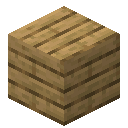
Stick, String, Any wooden slab
Use an empty one on an adult or nymph to catch it (sneak for the touchy ones). Place it to keep it: feed it its food plant, collect its eggs, watch nymphs moult.
Everything in Twiglight: crafting recipes, the Spectre companion, the 12 stick and leaf insects, hiding, defences, Mesh Cages, eggs, nymphs and the journal.
Stick insects and leaf insects for Minecraft 1.21.11, 1.21.1 and 26.3 (NeoForge), and a sister of Mothlight, Flutterlight, Scarablight and Mantislight: twelve real species that hide in plain sight on twigs, leaves, grass, ferns and bamboo. Finding them is the game. Keep them in Mesh Cages, feed them their food plant, collect their seed-like eggs and raise the nymphs. You can also raise the Spectre, a pale stick insect that rides on your shoulder, hides you from monsters and grows into a mount that climbs trees. It works with or without the sister mods.
Timings: an egg, each moult and each egg laid take a quarter to half an in-game day. Server owners can switch to fast
DEVtimings for testing.
Everything below comes straight from the mod: the recipes are its real recipe files and the pictures are in-game shots.
Every crafting recipe in Twiglight. Hover a slot to see the item. "Any leaves" and "Any wooden slab" take every kind.
Stick, String, Any wooden slab
Use an empty one on an adult or nymph to catch it (sneak for the touchy ones). Place it to keep it: feed it its food plant, collect its eggs, watch nymphs moult.


Shapeless: Book, Stick
A field guide with a page for every species you catch, and a Spectre tab.


Shapeless: Glass Bottle, Glow Lichen, Any leaves
Feed three to a grown, tamed Spectre and it grows into an Elder Spectre.


Stick, Leather, String
Put it on an Elder Spectre to ride it up tree trunks. Shears take it off.

Laid on the floor of a Mesh Cage by a fed adult (or dropped by wild ones). It looks like a seed. Set it on the ground, or use it on an empty cage, and it hatches into a nymph of its species.

Now and then laid in a Mesh Cage by a well-fed adult laying alone; also found in Woodland Mansion chests, and laid by tamed Spectres. Set it down and a Spectre nymph hatches, tamed to you.

The journal's reward for catching every species and owning a Spectre. Use it on your Spectre: its glow becomes Will-o'-the-Wisp, which its young can inherit.
The Spectre is a large, pale stick insect, white-green like moonlit lichen, that glows faintly at night. It is Twiglight's companion, the counterpart of Mothlight's Lumen.
Getting one. Now and then (1 in 24) an egg laid in a Mesh Cage is a pale ghost egg. It only happens when the adult is well fed (the cage full of leaves) and laying alone: one of the kinds that lay without a mate, with no mate in the next cage. Ghost eggs are also found in Woodland Mansion chests, and rare wild Spectres appear at night at the foot of trees in old growth taigas, jungles and dark forests, and at any hour in the Pale Garden. They shy away, so sneak up, and tame one with glow lichen.
Growing up. A ghost egg set on the ground hatches into a nymph tamed to whoever set it down. It moults three times (glow lichen speeds it up) into an adult. Two tamed adults fed glow lichen lay a ghost egg; one with no mate may lay one alone, at most once a day, as real stick insects do.
On your shoulder. Use a tamed Spectre with an empty hand and it climbs onto your shoulder. It comes with you through portals and climbs down if you sleep, glide or go underwater. Sneak and use an empty hand on a block to set it down.
What it lends you while it rides on your shoulder or follows you:
Looks. 5 markings (Lichen, Banded, Veined, Frosted, Barked), 5 glow colours (Moonlit, Mist, Foxfire, Dusk, and Will-o'-the-Wisp from the journal's reward), 4 body shapes (Smooth Twig, Spiny, Leaf-bodied, Winged) and a size, all inherited by its young.
The Wraith is the rare form: 1 in 256, or 1 in 16 for a wild one in the Pale Garden (in a world without one, a dark forest at night). Violet-black with pale lilac joints and a cold violet light, it speaks in a whisper, and at night it rears up tall when you look straight at it.
The Elder Spectre, a climbing mount. Feed a grown, tamed Spectre three Lichen Draughts and it grows into an Elder, more than twice its size, standing tall on straight legs. Put a Twig Saddle on it and ride: walk into a tree and it carries you up the trunk, clings where you stop, pushes up through the canopy and walks along the treetops at a crawl. Riding it is safe: no suffocation, no fall damage, and Slow Falling if you get off halfway up.
Journal. The Stick Insect Journal has a Spectre tab. Catch every species and own a Spectre to receive the Wisp Phial.
Hidden in plain sight. Wild stick insects appear near players already resting on their kind of hiding place: upright on a trunk, hanging under leaves, along grass and bamboo stems, among ferns, low on bark or by stones. They hold their front legs straight out ahead, which makes them look longer and more like a twig, and rock gently like a twig in the wind. Each species' colours match its hiding place. The Peruvian Fern Insect is the exception: black and yellow with red legs, it sits out in the open to warn rather than hide.
Night. Nearly all of them are active at night. By day they hold still; at night they wake, move, climb to a new resting place and walk a little. Night, with a light, is when movement gives them away.
Defences. Sneaking always lets you get close. Otherwise:
Wild life cycle. Wild adults sometimes drop an egg; the nymph that hatches grows up by itself. Wild ones eat nothing and break no blocks.
Music. Like a parrot, a stick insect near a playing jukebox dances, on the ground, on a trunk or in its cage. Seeing it earns a hidden advancement: Get Stick Bugged lol.
Every stick and leaf insect, with where it lives, where it hides, its food plant (what adults and nymphs eat, and what makes an adult lay), its defence and whether it lays without a mate. Leaves come from shears. Biome weights are relative chances.

The classic classroom stick insect: a green-brown twig with short antennae. By day it clings to a trunk, head up, front legs held straight out in front so it looks longer and thinner. Walk up to it and it lets go and drops, then lies stiff as a stick.
 Vines
 alone, without a mate
Almost every Indian stick insect is female. They lay eggs that hatch without a mate (parthenogenesis), and males are very rare. The insides of the front legs are red at the base.
Journal hint: A twig that drops when you come close.

The temperate forest's own stick insect: brown, very thin, with antennae almost as long as its body. It keeps to the trunks and branches by day and climbs into the leaves at night.
Oak Leaves only with a mate in the next cage
Females drop their eggs one by one from the tree tops. In years when there are very many, the falling eggs have been said to sound like light rain.
Journal hint: Listen for rain under the oaks on a dry night.

A slim green stick insect that lies along grass stems and in berry bushes, swaying when the wind blows. In the game a single one lays eggs without a mate.
 Sweet Berries
 alone, without a mate
In some places only females are found, and they lay eggs that hatch without a mate. In others there are both males and females.
Journal hint: One grass stem in the meadow is not a grass stem.

Also called Macleay's Spectre. A bundle of dead leaves: broad, spiny, with leafy flaps on its legs and body, and a tail curled up over its back like a scorpion. It hangs under the leaves and rocks gently. Grab it without sneaking and it kicks with its spines.
 Acacia Leaves
 alone, without a mate
Its eggs look like seeds and carry a fatty knob that ants like. Ants carry the eggs into their nest, where they are safe, and the newly hatched nymphs look and run like ants until they leave.
Journal hint: A clump of dead leaves with a scorpion tail.

A big, bright green stick insect with yellow spots and stripes and folded wings. Grab it without sneaking and it flashes the red of its wings and flies off.
Acacia Leaves only with a mate in the next cage
It is one of the largest and heaviest stick insects in Australia.
Journal hint: A green giant that shows red when grabbed.

A heavy, broad, lime-green giant covered in spines. Grab her without sneaking and she snaps her spiny hind legs shut on your hand.
 Jungle Leaves
 only with a mate in the next cage
The female is one of the heaviest insects in the world. When threatened she raises her spiny hind legs and snaps them shut, and hisses by rubbing her short wings together.
Journal hint: The heaviest leaf in the jungle has spines.

A walking leaf: flat, broad and green, with leaf-shaped flaps on its legs and veins like a real leaf. It hangs under jungle leaves and rocks to and fro like a leaf in the wind. It has no other defence.
Oak Leaves alone, without a mate
Its body even has leaf veins and, in some, brown spots like a damaged leaf. When it walks it rocks to and fro like a leaf in a breeze. Newly hatched nymphs are reddish brown and turn green once they start eating.
Journal hint: A leaf that hangs the wrong way up.

The one that does not hide: black with yellow bands and red legs, sitting out in the ferns. Grab it without sneaking and it sprays a puff and gets away.
 Fern
 only with a mate in the next cage
Unlike most stick insects it does not hide: its bright colours warn that it tastes bad, and it can spray a foul-smelling fluid. It is one of very few stick insects that feed on ferns.
Journal hint: Black and yellow in the ferns, and not afraid.

A thick, dark brown, spiny stick insect with no wings. By day several hide together low on a trunk, close to the ground. Grab one without sneaking and it pinches with its spiny hind legs.
Sweet Berries only with a mate in the next cage
By day groups hide together in tree hollows. The male's hind legs each carry a large spine that he uses to pinch attackers and rival males.
Journal hint: A huddle of thorns at the foot of a mangrove.

Very long and very thin, pale green to brown. It presses itself along bamboo stems, legs held close, and drops to the ground and lies still if you walk up to it.
 Rose Bush
 alone, without a mate
A slender, wingless stick insect. Kept animals lay eggs that hatch without a mate, and it is one of the stick insects most often kept as a pet.
Journal hint: A stem of bamboo with legs.

A pale, thin, sandy stick insect with long folded wings. Grab it without sneaking and it flashes its pink hind wings and flies away.
 Cherry Leaves
 alone, without a mate
Unlike most stick insects it is a good flier, and it shows its pink hind wings when disturbed. Kept females lay eggs without mates and glue them to bark and leaves.
Journal hint: A twig that opens pink wings.

The "tree lobster": a heavy, glossy black stick insect with thick hind legs and no wings. Pairs hide together in a crevice by the stones. Rare.
 Azalea Leaves
 only with a mate in the next cage
It was thought extinct after rats reached Lord Howe Island in 1918, until a tiny group was found in 2001 on Ball's Pyramid, a sea stack about 23 km away, living under a single bush. At night pairs sleep side by side, the male's legs over the female.
Journal hint: Lost for eighty years. Look by the sea stones for a pair.

Thin and green like a cave vine, with a few amber flecks like glow berries. It hangs among the vines with its legs drawn in and sways with them. With no sun underground, it is out at any hour.
 Glow Berries
 alone, without a mate
A Twiglight original. Real stick insects sway on purpose: rocking like a twig in the breeze makes them harder to pick out than keeping still.
Journal hint: One of the cave vines has legs.

Red-brown and ridged like a crimson stem, it clings to the huge fungus stems head up. Fire and lava cannot hurt it.
 Crimson Roots
 only with a mate in the next cage
A Twiglight original. Real stick insects can match the colour of the plant they live on, and some turn darker or lighter as they grow.
Journal hint: A crimson stem with a twig that is not part of it.

Pale purple and knobbly, it lies along a chorus stalk and looks exactly like part of it.
 Chorus Fruit
 alone, without a mate
A Twiglight original. Real stick insect eggs look like plant seeds, so well that ants carry them off to their nests, where they hatch in safety.
Journal hint: A chorus stalk that walks off.

A leaf insect gone grey-white like the pale oak leaves it hangs under, almost invisible among them. It is the only phasmid of the Pale Garden.
 Pale Oak Leaves
 alone, without a mate
A Twiglight original, after the real leaf insects, whose bodies even copy the veins of a leaf.
Journal hint: A pale oak leaf that rocks when there is no wind.
The Mesh Cage does both catching and keeping. Use an empty one on an adult or a nymph to catch it, and place it to keep it: the insect is drawn inside, an adult clinging to the netting and a nymph walking on the floor. Breaking the cage keeps everything in it.
Eggs and nymphs. Set an egg on solid ground, or use it on an empty cage, and it hatches into a nymph after about half a day. A nymph is a small, wingless copy of the adult with its own colours (leaf insect nymphs hatch reddish brown). It moults three times, sooner when fed its food plant by hand, and after the third moult it is an adult. There is no pupa. A nymph in a cage only grows while it has food.
New in 0.3.0.
mobGriefing on, and where the owner may build (spawn protection, the world border, claim mods). It never replaces a block or plants on farmland.Craft it from a book, a stick and any leaves, then use it. It has three tabs: a Guide to the mod, the Insects (every species you catch gets a page with a turning 3D model, where it lives, when it is active, where it hides, what it eats, how it lays, its defence, notes and one true fact; the rest show as a silhouette with a hint) and the Spectre. Catch every species and own a Spectre for the Wisp Phial.
Settings in twiglight-server.toml (per world):
| Setting | Default | What it does |
|---|---|---|
timings | PRODUCTION | PRODUCTION: an egg, each moult and each egg laid take from a quarter to half an in-game day. DEV: ten times faster (egg to adult in about 4 minutes) for testing. |
wild.wildPhasmids | on | Wild stick insects appear near players, already hiding on trunks, leaves and plants. |
wild.maxNearPlayer | 8 | Most wild stick insects within 48 blocks of a player before no more appear. |
wild.spawnChance | 35 | Chance in 100, every 10 seconds per player, that one (or a group) appears nearby. |
wild.wildLifeCycle | on | Wild adults sometimes drop an egg to the ground; it hatches into a nymph that grows up by itself. They eat nothing and damage nothing. false = wild stick insects only ever appear as adults. |
spectre.ghostEggOdds | 24 | 1 in this many eggs laid in a Mesh Cage by a well-fed adult laying alone (a kind that lays without a mate, with no mate in the next cage) is a pale ghost egg that hatches into a Spectre. 0 = never. |
spectre.rareOdds | 256 | 1 in this many new Spectres is the rare form (the Wraith). Two-parent eggs with a rare parent are rare half the time whatever this says. 0 = never. |
spectre.rarePaleGardenOdds | 16 | 1 in this many wild Spectres met in a Pale Garden is the rare form (in a world without a Pale Garden: in a dark forest at night). 0 = use rareOdds. |
spectre.loneLaying | on | A grown, tamed Spectre fed glow lichen with no other Spectre ready to mate may lay a ghost egg alone (at most once an in-game day), as real stick insects do. |
spectre.wildSpectres | on | Wild Spectres sometimes appear at night in old growth taigas, jungles and dark forests, and in Pale Gardens. |
spectre.wildSpectreChance | 4 | Chance in 100, every 30 seconds per player in the right place and time, that a wild Spectre appears (never more than one wild one within 64 blocks). |
spectre.ghostEggChestChance | 10 | Chance in 100 that a Woodland Mansion chest also holds a Ghost Egg. 0 = never. |
spectre.shoulderRiding | on | A tamed Spectre (not an Elder) rides on its owner's shoulder when asked. |
spectre.companionRange | 12 | A Spectre lends its owner its powers while on the shoulder or following within this many blocks (not sitting). |
spectre.stillnessCloak.enabled | on | Stillness cloak: stand still, or sneak, for a moment next to leaves, grass, ferns or logs and you get the Stillness effect. Hostile mobs farther than noticeRange that are not already after you do not pick you as a target, and one that is after you gives up after a second out of sight. Moving normally, attacking or being hit ends it. The Warden, bosses and raiders in a raid ignore it. |
spectre.stillnessCloak.stillSeconds | 1.5 | How long you must hold still (or sneak) before the cloak settles. |
spectre.stillnessCloak.noticeRange | 4 | Mobs closer than this still notice you (Invisibility has no such limit, so the cloak stays weaker). |
spectre.stillnessCloak.coverRange | 2 | How near (blocks) a leaf, grass, fern or log block must be (block tag twiglight:spectre_cover). |
spectre.seeHidden.enabled | on | Seeing the hidden: camouflaged creatures near you (this mod's stick insects and, when installed, the sister mods' insects; entity tag twiglight:spectre_reveals) shimmer faintly, for you only. |
spectre.seeHidden.range | 16 | How far away (blocks) hidden creatures shimmer for the owner. |
spectre.legDecoy.enabled | on | Leg-drop decoy: sometimes when a hostile mob hits you, your Spectre sheds a glowing leg that draws the hostile mobs near you for a few seconds. It grows the leg back before it can do it again. |
spectre.legDecoy.chance | 25 | Chance in 100 per hit. |
spectre.legDecoy.seconds | 5 | How long the leg glows and draws mobs. |
spectre.legDecoy.regrowSeconds | 90 | How long the Spectre needs to grow the leg back (the decoy's cooldown). |
spectre.climbing.enabled | on | The climbing mount: a saddled Elder Spectre carries its owner up tree trunks (logs, leaves, mushroom stems, bamboo; block tag twiglight:spectre_climbable), pushes up through the canopy and walks on it at a crawl. |
spectre.climbing.riding | on | false = Elder Spectres cannot be ridden at all. |
grovemother.planting | on | It lays seed-eggs of the trees around it now and then. |
grovemother.replanting | on | It replants a tree cut down near its home (where the trunk stood on dirt or grass and the spot is left empty). |
grovemother.radius | 8 | How far from its home (blocks, across) it looks for trees, plants and replants. Up and down: 4 blocks. |
grovemother.saplingsPerDay | 6 | Most saplings (seed-eggs) it plants in one in-game day, laid and replanted together. A dark oak or pale oak clutch is four. 0 = none. |
grovemother.layEverySeconds | 300 | Seconds between seed-egg layings (PRODUCTION timings; DEV timings are ten times faster). |
grovemother.replantDelaySeconds | 60 | Seconds after a tree is cut down before it replants the spot (PRODUCTION timings; DEV is ten times faster). |
grovemother.wildGrovemothers | on | Wild Grovemothers sometimes appear in old growth forests and dark forests (biome tag twiglight:grovemother_habitat). Wild ones plant nothing. |
grovemother.wildGrovemotherChance | 2 | Chance in 100, every 30 seconds per player in the right place, that a wild Grovemother appears (never more than one wild one within 96 blocks). |
Permission nodes (for permission mods such as LuckPerms): twiglight.command.admin (operators by default) for /twiglight journal discover <species|all|spectre> and /twiglight journal reset; twiglight.spectre.ride, twiglight.spectre.climb and twiglight.spectre.powers (everyone by default) for riding an Elder Spectre, climbing on one and the Spectre's powers.
Install Twiglight on both the server and every player's game.